Land Clearing & Excavation in Beaver County, PA
Local Excavating Contractor Expertise
From Rochester to Aliquippa and across Beaver County, PA, professional excavating contractor services handle the heavy lifting for residential and commercial projects. Whether preparing land for new construction, clearing dense brush, or managing site grading and dirt work, experienced teams know the local soil types, drainage patterns, and permit requirements that matter in this region. Our excavating contractor expertise covers land clearing, brush hogging, grading and dirt work, and hauling and debris removal—critical first steps for any development.
This page walks you through what to expect when hiring an excavating contractor in Beaver County, PA, and how to prepare for land clearing and site prep work that sets up your project for success.
How We Work
Professional excavation starts with clear planning and ends with a site ready to build. Here's the typical flow.
Site Assessment
Contractor walks the property, checks drainage, reviews zoning permits needed, and identifies obstacles like trees or rocks.
Quote & Planning
You receive an estimate for equipment, labor, and hauling based on scope. Permits are clarified with local building departments.
Clearing & Prep
Trees and brush are removed. Boulders extracted. Soil is cleared and prepared. Debris is staged for hauling.
Grading & Drainage
Site is graded to proper slope. Drainage systems installed to handle Beaver County's seasonal water flow.
Hauling & Cleanup
Debris and excess soil are hauled away. Site is cleaned and left ready for construction or landscaping.
Final Walkthrough
You inspect the work, confirm slopes and drainage meet plan. Next contractor or builder takes over with confidence.
You know exactly what's happening at each stage and what comes next.
Our Services
Excavation services in Beaver County span residential homes and commercial developments. We handle what heavy equipment and skilled crews do best.
Land Clearing & Brush Hogging
Beaver County properties often sit on wooded or overgrown land. Dense brush, small trees, and wild vegetation need removal before grading begins. Brush hogging handles dense vegetation fast; larger trees are felled and removed. This work matters in places like North Sewickley, where properties have mature trees and challenging terrain.
Clearing exposes the actual site, reveals drainage issues, and prepares space for construction or landscaping. Most projects include erosion control measures to meet local Clean Streams requirements.
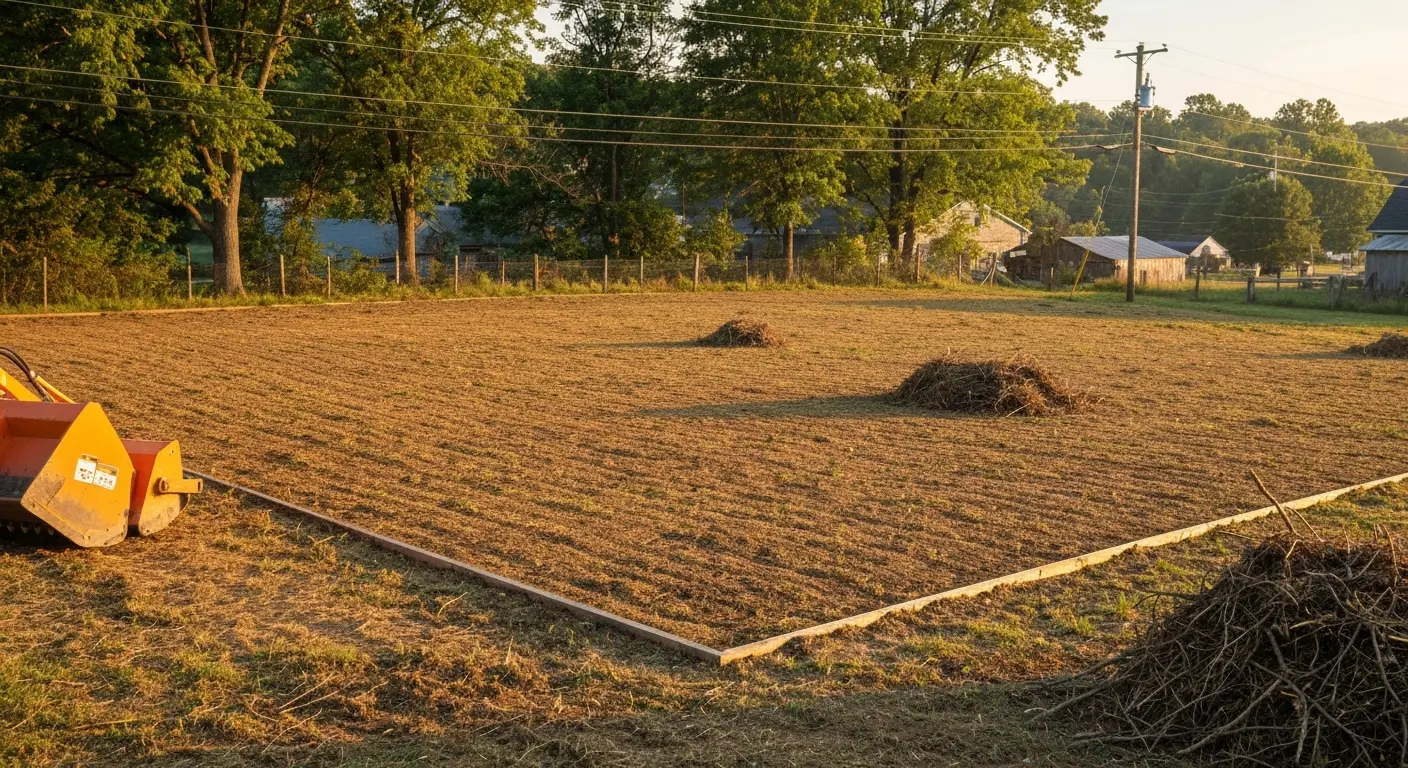
Brush hogging cleared lot near New Brighton, PA
Grading & Dirt Work
Proper grading prevents water pooling and foundation problems. Beaver County's rolling terrain and seasonal rain demand slopes that shed water away from structures. Grading work levels foundations, creates proper drainage patterns, and compacts soil for stability. This is critical for residential homes in areas like Rochester and Ambridge, where waterlogged yards are common.
Professional grading uses surveying and modern equipment to achieve precise slopes that last.
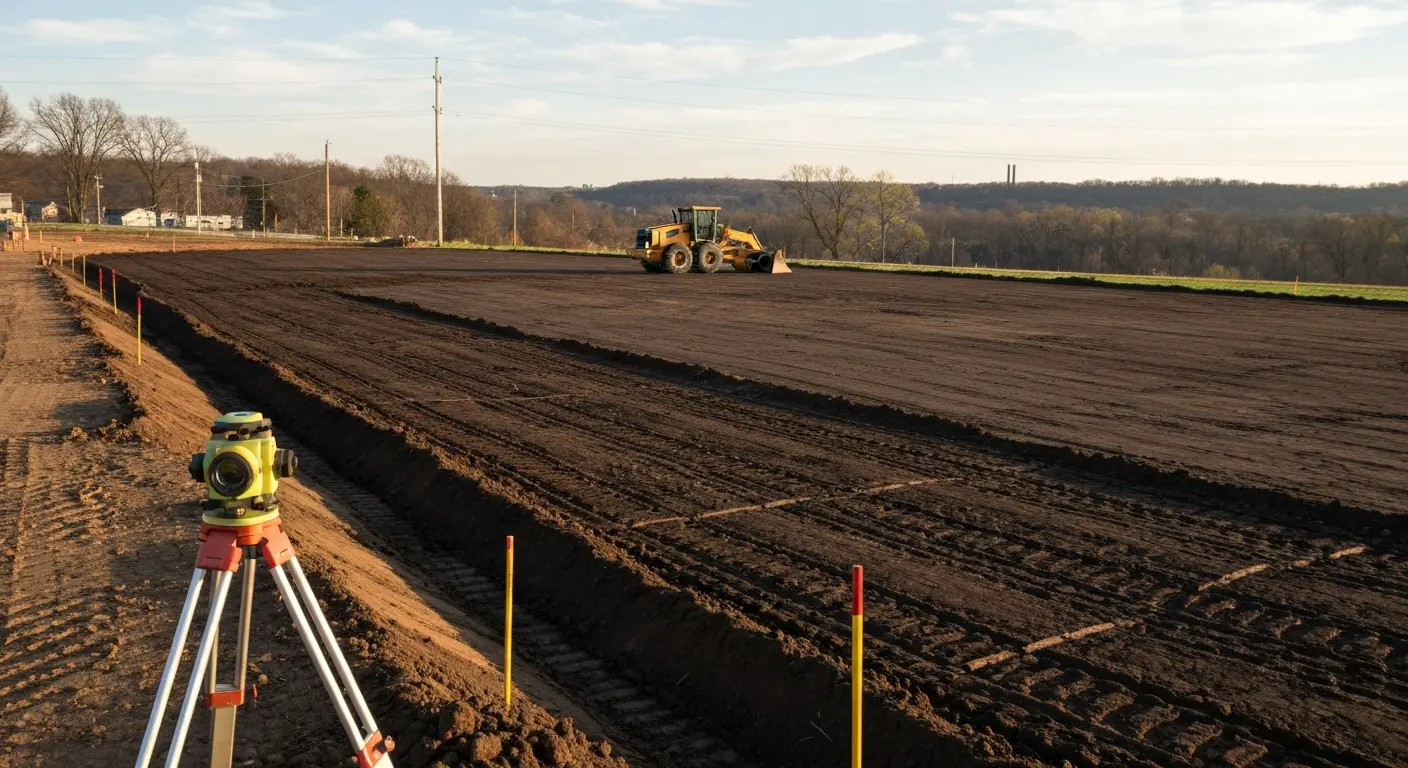
Site graded and compacted for new construction, Beaver Falls area
Hauling & Debris Removal
Excavation generates debris. Trees become chips or are hauled to landfills. Rocks and concrete go to recycling. Excess fill dirt can be stockpiled or hauled away. Professional removal saves you the hassle of renting trucks and managing disposal. Beaver County has specific guidelines for soil disposal and recycling, especially near the Beaver River and its tributaries.
We handle the logistics so your site is clean and project-ready.
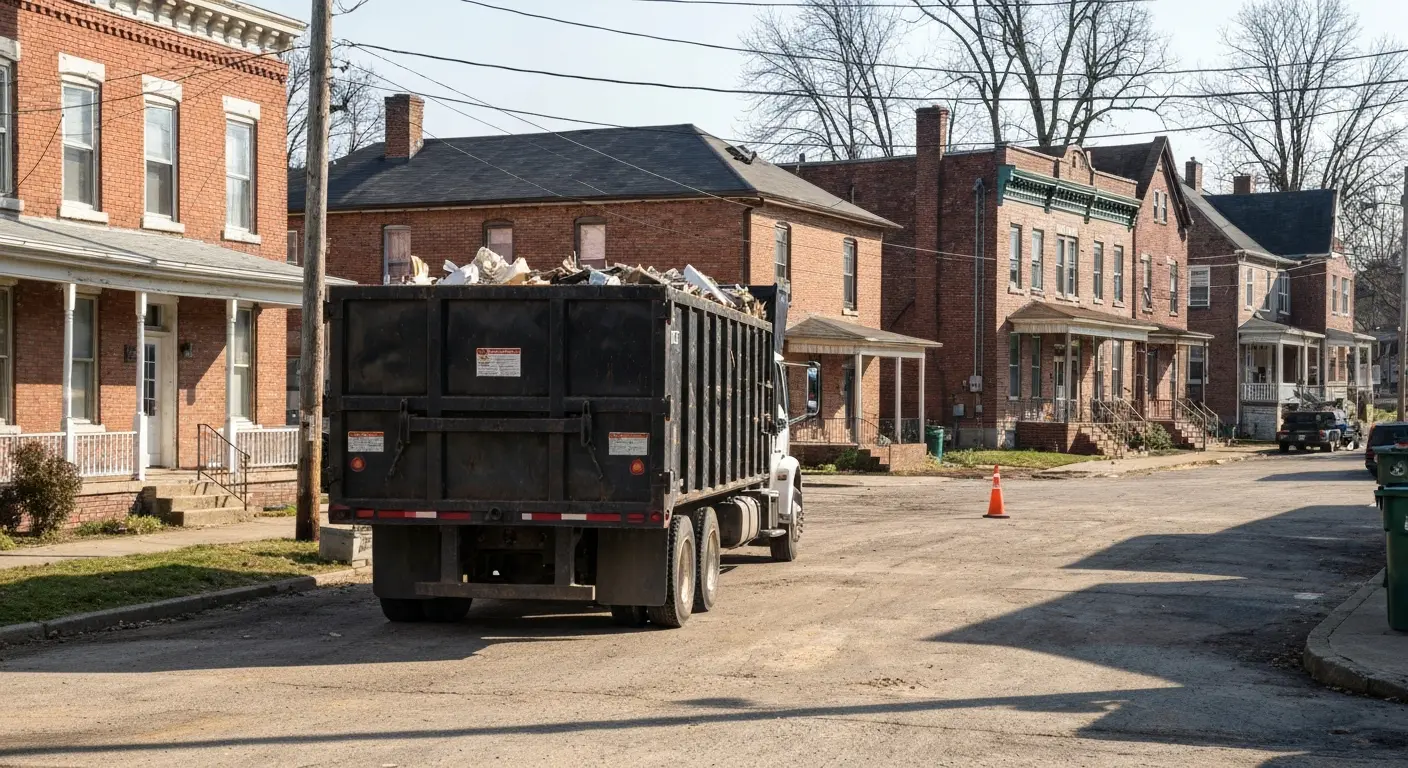
Loaded equipment staging debris for removal in Aliquippa
Beaver County building departments require proof of proper debris disposal. We handle the paperwork and compliance.
Why Local Expertise Matters
Beaver County's unique geography and regulations require contractors who understand the region.
Soil & Drainage Know-How
Beaver County sits on mixed soil types—clay, shale, and silt—that affect how water drains. Spring and fall rains can overwhelm poor drainage systems. Local crews understand which slopes work here and how to manage seasonal water flow near the Beaver River and its floodplain areas.
Building Permit Navigation
Beaver Borough, Aliquippa, Beaver Falls, and other municipalities each have slightly different permit and erosion control rules. Professional excavators know which offices to contact, what plans to submit, and how to avoid costly delays or stop-work orders.
Residential Site Realities
Most Beaver County properties feature single-family homes on spacious, older lots with mature trees and established utilities. Working near gas lines, water mains, and telephone conduits requires precision. Contractors familiar with the area avoid dangerous mistakes and respect neighbor property lines.
30+ Years of Beaver County Site Work
Established contractors have completed 500+ projects across Beaver Falls, Rochester, Aliquippa, and beyond. They've graded driveways on river-view lots, cleared land for new subdivisions, and worked with builders from concept to ribbon-cutting.
Serving All of Beaver County
We're based in and work throughout Beaver County, from river towns to rural properties.
Beaver Falls & Aliquippa
Largest cities in the county. Urban and suburban residential projects, commercial site prep, and redevelopment work.
Rochester & New Brighton
Established residential communities with mature trees and slope-grading challenges. Drainage is always a consideration.
North Sewickley & Freedom
Rural townships with larger properties, farm acreage, and land development projects. Wooded sites need aggressive clearing.
Ambridge & Monaca
River communities near the Ohio and Beaver Rivers. Floodplain awareness and proper site preparation are critical.
Beaver Borough & Economy
County seat and surrounding boroughs. Municipal compliance, zoning coordination, and residential site work.
North & East Beaver
Includes Darlington, Hopewell, and New Galilee areas. Rugged terrain, forest clearing, and land reclamation projects.
Why Choose Local Excavation Expertise
No Surprises, No Delays
Contractors who work in Beaver County regularly know what permits are needed, which agencies to contact, and how long approvals typically take. They avoid bottlenecks that slow down out-of-area crews unfamiliar with local procedures.
Site-Specific Equipment & Technique
Every property is different. Beaver County crews bring the right mix of dozers, excavators, and loaders—and know which tool solves which problem. Work on clay-heavy soil near Aliquippa requires different technique than sandy lots near the river.
Proven Track Record Nearby
References are local. Drive past completed work. Talk to neighbors who used the same team. Established contractors build reputation one neighborhood at a time—and they protect it carefully.
Frequently Asked Questions
Do I need a permit for land clearing in Beaver County?
Most clearing requires a permit from your township or borough building department. Erosion control and soil disturbance plans are usually mandatory. Professional contractors handle the paperwork and inspections.
What happens to trees and debris after clearing?
Trees can be chipped for mulch, hauled to landfills, or donated for firewood. Rocks and concrete go to recycling centers. Soil is either stockpiled on-site or hauled away. Your contractor handles disposal logistics.
How do you handle drainage on sloped property?
Grading directs water away from structures using proper slope ratios (typically 2% to 5% depending on soil type). French drains, swales, or catch basins manage surface water. Beaver County soil conditions determine the best approach.
What's involved in site preparation for new construction?
Clearing, grading, utility trenching, and final compaction. Site is surveyed to match engineering plans. Stormwater management is installed. Final inspection certifies the site is ready for foundation work.
Can excavation work start in winter or wet weather?
Weather affects scheduling. Saturated soil compacts poorly and becomes muddy. Most major work happens spring through fall when ground conditions allow proper grading and compaction.
How do you locate underground utilities before digging?
Call 811 (PA One Call) at least 3 days before work begins. Utilities are marked. Contractors hand-dig near marked lines to avoid damaging gas, water, electrical, and telecom lines.
DISCOVER WHAT OUR CUSTOMERS HAVE TO SAY ABOUT US
REVIEWS
proudly serving these areas
Allegheny County, PA
Bedford County, PA
Beaver County, PA
Blair County, PA
Butler County, PA
Clarion County, PA
Clearfield County, PA
Crawford County, PA
READY TO take the next step?
get a free quote TODAY!
COMPANY
(724) 372-4603
QUICK LINKS
our services
service areas
operating HOURS
Mon: 09:00 AM - 05:00 PM
Tue: 09:00 AM - 05:00 PM
Wed: 09:00 AM - 05:00 PM
Thu: 09:00 AM - 05:00 PM
Fri: 09:00 AM - 05:00 PM
Sat: Closed - Closed
Sun: Closed - Closed